Top 7 Skills Every Engineering Student Should Learn Before Graduation

Engineering is one of the most respected and rewarding career paths, but earning a degree alone is no longer enough to secure a successful job. Today’s employers seek graduates who combine technical knowledge with practical experience, communication abilities, and problem-solving skills. As industries adopt advanced technologies such as automation, robotics, artificial intelligence, CNC machining, and Industry 4.0, engineering students must prepare themselves for a competitive job market. Many students spend four years focusing on academics but overlook the practical and professional skills that employers truly value. This often creates a gap between graduation and employment. By developing the right set of skills before completing your degree, you can significantly improve your chances of landing a high-paying job and building a successful career. In this comprehensive guide, we’ll explore the Top 7 Skills Every Engineering Student Should Learn Before Graduation and explain why each one is essential for long-term professional success. Why Skills Matter More Than Ever Engineering companies no longer hire candidates based only on academic marks. During campus placements and interviews, recruiters evaluate whether candidates can apply their knowledge to real-world situations. Employers look for professionals who can: Students who develop these abilities before graduation have a significant advantage over others. 1. Practical Technical Skills The most important skill every engineering student should acquire is hands-on practical experience. Classroom lectures teach engineering concepts, but practical training teaches students how those concepts are applied in industries. Depending on your engineering discipline, practical skills may include: For mechanical engineering students, practical exposure to machine tools and manufacturing processes builds confidence and makes them industry-ready. Benefits of Practical Training Students who spend time in workshops, laboratories, or industrial training institutes gain a competitive edge during placements. 2. CAD, CAM, and Engineering Software Skills Modern engineering relies heavily on computer-aided design and manufacturing software. Employers expect graduates to have at least basic knowledge of engineering tools such as: These software applications are used for: Learning engineering software before graduation can greatly improve your career opportunities in design, manufacturing, and product development. 3. Problem-Solving and Analytical Thinking Engineering is fundamentally about solving problems. Every project presents challenges, whether it’s designing a component, optimizing production, reducing costs, or improving efficiency. Strong problem-solving skills enable engineers to: Students should practice solving practical engineering problems instead of memorizing textbook answers. How to Improve These activities help develop logical thinking and decision-making abilities. 4. Communication and Presentation Skills Many technically talented engineers struggle to communicate their ideas effectively. Engineering professionals regularly: Strong communication skills improve workplace performance and leadership potential. Ways to Improve Clear communication helps engineers explain complex ideas in a simple and professional manner. 5. Teamwork and Leadership Skills Engineering projects involve collaboration between multiple departments, including design, production, quality, maintenance, procurement, and management. Employers prefer graduates who can: Leadership doesn’t necessarily mean managing people. It also means taking initiative, being responsible, and motivating others toward a common goal. How to Build Leadership Skills Developing leadership abilities early can accelerate career growth. 6. Time Management and Professional Discipline Meeting deadlines is critical in engineering. Whether you’re designing a machine, completing a production schedule, or delivering a project, time management directly affects performance. Engineering students should learn to: Professional discipline also includes: Companies highly value disciplined employees because they contribute to productivity and operational efficiency. 7. Continuous Learning and Adaptability Technology changes rapidly, and engineers must continuously update their skills. Today’s engineering landscape includes: Students who adopt a learning mindset can adapt to new technologies and remain competitive throughout their careers. Ways to Continue Learning Successful engineers never stop learning. Bonus Skills That Give You an Extra Advantage In addition to the top seven skills, students can further strengthen their profile by learning: Basic Programming Languages such as: Programming skills are increasingly useful across engineering disciplines. Industrial Safety Understanding workplace safety is essential for every engineer. Topics include: Safety awareness demonstrates professionalism and responsibility. Quality Control and Measurement Engineers should know how to use: Quality inspection skills are valuable in manufacturing and production industries. Internship Experience Internships provide real-world exposure and help students: Employers often prefer candidates with internship experience. Why Practical Training Is the Biggest Career Advantage Many graduates possess excellent theoretical knowledge but lack practical skills. Practical training helps students: Students who complete industrial training are often more attractive to employers because they require less onboarding and can contribute immediately. Common Mistakes Engineering Students Should Avoid To improve employability, avoid these common mistakes: Addressing these areas early can make a significant difference during placements. How to Prepare Before Graduation Here are practical steps every engineering student should take before graduating: Following these steps will make you more confident and job-ready. Career Benefits of Learning These Skills Students who develop these competencies before graduation often enjoy: These advantages extend well beyond the first job and contribute to sustained professional success. Final Thoughts Graduating with an engineering degree is a significant achievement, but your success depends on the skills you develop beyond the classroom. Employers today seek professionals who can combine theoretical knowledge with practical expertise, effective communication, problem-solving abilities, and a commitment to continuous learning. By focusing on the Top 7 Skills Every Engineering Student Should Learn Before Graduation—practical technical skills, engineering software proficiency, analytical thinking, communication, teamwork, time management, and adaptability—you can position yourself as a highly employable and future-ready engineer. Start building these skills early, seek practical experience whenever possible, and embrace lifelong learning. The effort you invest before graduation will pay dividends throughout your engineering career. Frequently Asked Questions (FAQs) 1. What are the most important skills every engineering student should learn before graduation? The most valuable skills include practical technical training, CAD/CAM software knowledge, problem-solving, communication, teamwork, time management, and adaptability to new technologies. 2. Why is practical training important for engineering students? Practical training helps students apply classroom concepts to real industrial environments, making them more confident, technically competent, and job-ready. 3. Which engineering software should students learn? Popular software includes AutoCAD, SolidWorks, CATIA, Siemens NX, Fusion 360, ANSYS, MATLAB, … Read more

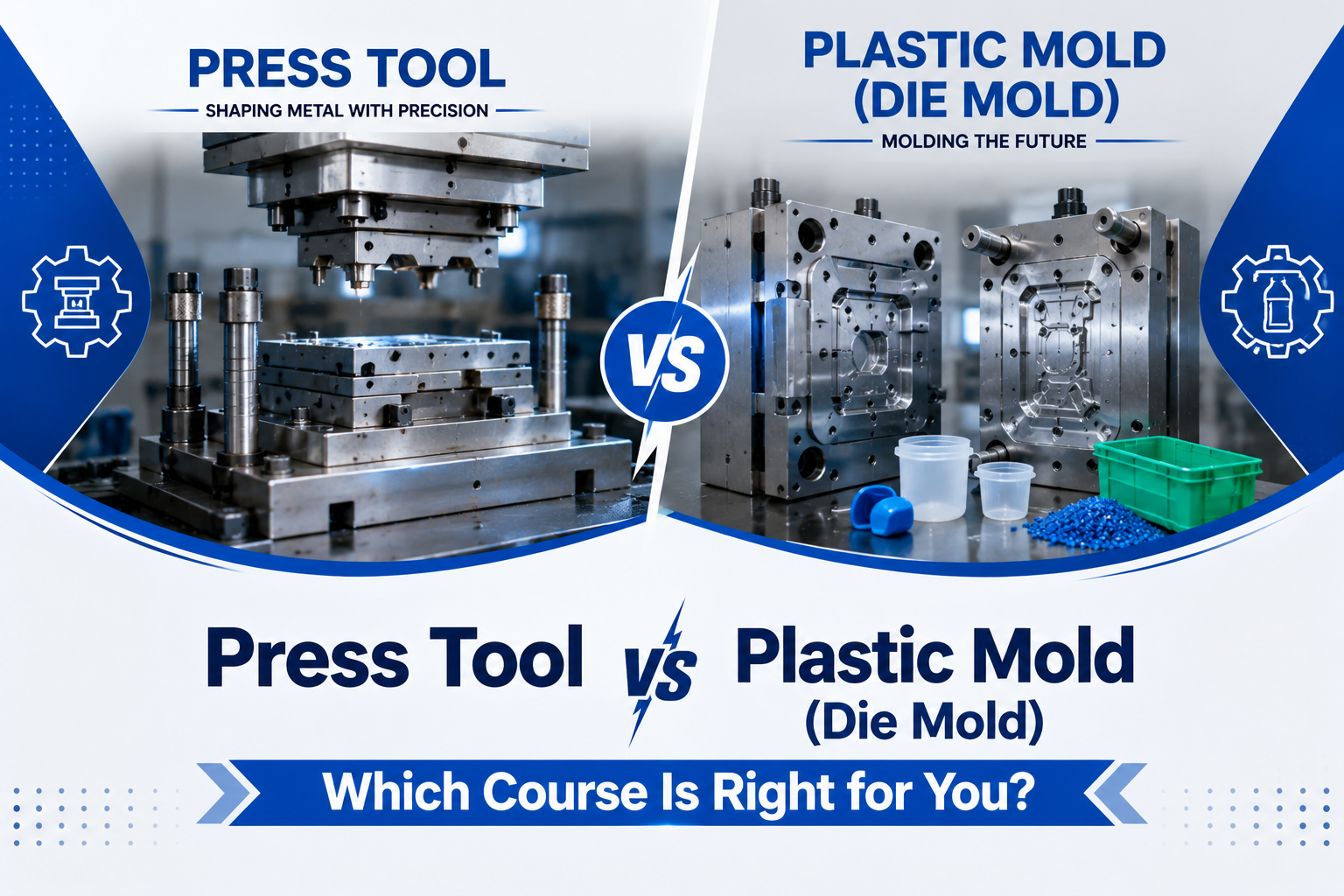
Press Tool vs Plastic Mold (Die Mold): Which Course Is Right for You?

The manufacturing industry is one of the fastest-growing sectors worldwide, creating thousands of job opportunities every year. As industries adopt advanced production technologies, the demand for skilled professionals in tool room engineering continues to rise. Two of the most popular and rewarding career paths in this field are Press Tool and Plastic Mold (Die Mold). Many students completing ITI, Diploma, Mechanical Engineering, or Production Engineering often ask: The truth is that both courses provide excellent career opportunities, but they focus on different manufacturing processes and industries. This comprehensive guide compares Press Tool and Plastic Mold (Die Mold) courses in detail, helping you choose the right career path based on your interests, skills, and long-term goals. What Is a Press Tool Course? A Press Tool Course focuses on designing, manufacturing, assembling, and maintaining tools used for shaping sheet metal into finished products. Press tools are used in conjunction with power presses to cut, bend, punch, pierce, blank, emboss, and form metal components with high precision. Students receive practical training in: Press tool manufacturing is widely used for mass production of metal components. What Is a Plastic Mold (Die Mold) Course? A Plastic Mold (Die Mold) Course focuses on the design and manufacturing of molds used for plastic injection molding. Plastic molds are essential for producing high-quality plastic products with consistency and precision. Students learn: Plastic molding has become one of the most important manufacturing technologies due to the growing use of plastic products in everyday life. Press Tool vs Plastic Mold: Understanding the Difference Although both belong to the tool room industry, they differ significantly in the materials they process and the manufacturing methods they use. Feature Press Tool Plastic Mold (Die Mold) Material Sheet Metal Plastic Manufacturing Process Pressing, Punching, Blanking, Forming Injection Molding Production Equipment Power Presses Injection Molding Machines Main Product Metal Components Plastic Components Primary Industries Automotive, Electrical, Sheet Metal Automotive, Packaging, Medical, Consumer Goods Industries That Hire Press Tool Professionals Press Tool professionals are in demand across industries such as: Automotive Manufacturing Manufacturing: Electrical Equipment Production of: Home Appliances Manufacturing: Industrial Machinery Production of: Industries That Hire Plastic Mold Professionals Plastic mold professionals work in rapidly expanding industries. Automotive Industry Manufacturing: Medical Equipment Production of: Consumer Goods Manufacturing: Packaging Industry Manufacturing: Electronics Industry Production of: Skills Learned in a Press Tool Course Students develop practical expertise in: These skills prepare students for high-volume metal manufacturing. Skills Learned in a Plastic Mold Course Students gain knowledge in: These skills are highly valued in modern plastic manufacturing. Career Opportunities After a Press Tool Course Graduates can work as: Press Tool Technician Responsible for manufacturing and maintaining press tools. Tool Room Technician Works on precision tooling and machine operations. Tool Maker Manufactures punches, dies, and forming tools. Production Engineer Supervises sheet metal production processes. Quality Inspector Ensures dimensional accuracy of manufactured components. Maintenance Technician Maintains press tools and production equipment. Career Opportunities After a Plastic Mold Course Students can build careers as: Mold Technician Manufactures and maintains injection molds. Mold Designer Designs molds using CAD software. CNC Programmer Programs CNC machines for mold manufacturing. EDM Operator Specializes in Electrical Discharge Machining. VMC Operator Performs precision machining on mold components. Product Development Engineer Develops new plastic products for manufacturing. Salary Comparison Salary depends on skills, experience, and company. Press Tool Career Freshers: ₹15,000–₹22,000/month Experienced Professionals: ₹30,000–₹60,000/month Senior Tool Room Engineers: ₹70,000–₹1,20,000+/month Plastic Mold Career Freshers: ₹18,000–₹25,000/month Experienced Professionals: ₹35,000–₹70,000/month Senior Mold Designers: ₹80,000–₹1,50,000+/month Professionals with CAD/CAM and mold design expertise often command higher salaries due to the complexity of mold manufacturing. Which Course Has Better Future Scope? Both fields offer excellent long-term opportunities. Press Tool Industry Growth Demand remains strong because sheet metal components are essential in: Plastic Mold Industry Growth Plastic product demand continues to increase due to: With sustainable plastics and advanced polymers gaining popularity, mold manufacturing is expected to grow significantly. Which Course Is Easier to Learn? Both courses require: Students who enjoy working with metal fabrication may prefer Press Tool, while those interested in precision mold making and product development may find Plastic Mold more engaging. Importance of Practical Training Theory introduces concepts, but practical experience is what makes students industry-ready. Hands-on training helps students: Employers value candidates who have worked on real industrial projects during their training. Software Used in Both Courses Modern tool room professionals often work with: Learning these tools enhances job prospects and opens doors to design-oriented roles. Who Should Choose a Press Tool Course? A Press Tool Course is ideal for: Who Should Choose a Plastic Mold Course? A Plastic Mold Course is suitable for: Can You Learn Both? Yes. In fact, many leading tool room professionals gain expertise in both Press Tool and Plastic Mold technologies. Learning both courses offers several advantages: A professional with skills in both metal forming and plastic molding is highly valuable in modern manufacturing. How to Choose the Right Course When deciding between Press Tool and Plastic Mold, consider: Choose Press Tool if you: Choose Plastic Mold if you: Your choice should align with your interests, career goals, and the type of manufacturing environment you want to work in. Final Thoughts Choosing between a Press Tool Course and a Plastic Mold (Die Mold) Course is not about selecting the “better” option—it is about selecting the course that best matches your interests and career aspirations. Press Tool technology is the backbone of sheet metal manufacturing, powering industries such as automotive, electrical equipment, and industrial machinery. Plastic Mold technology drives the production of countless products used every day, from medical devices and electronics to packaging and automotive interiors. Both fields offer strong demand, competitive salaries, and excellent career growth. With quality practical training, exposure to modern CNC and VMC machining, and continuous skill development, you can build a successful and rewarding career in the manufacturing industry. If you’re passionate about engineering, precision, and creating products that shape the modern world, either course can provide a solid foundation for a long-term career in advanced manufacturing. Frequently Asked … Read more

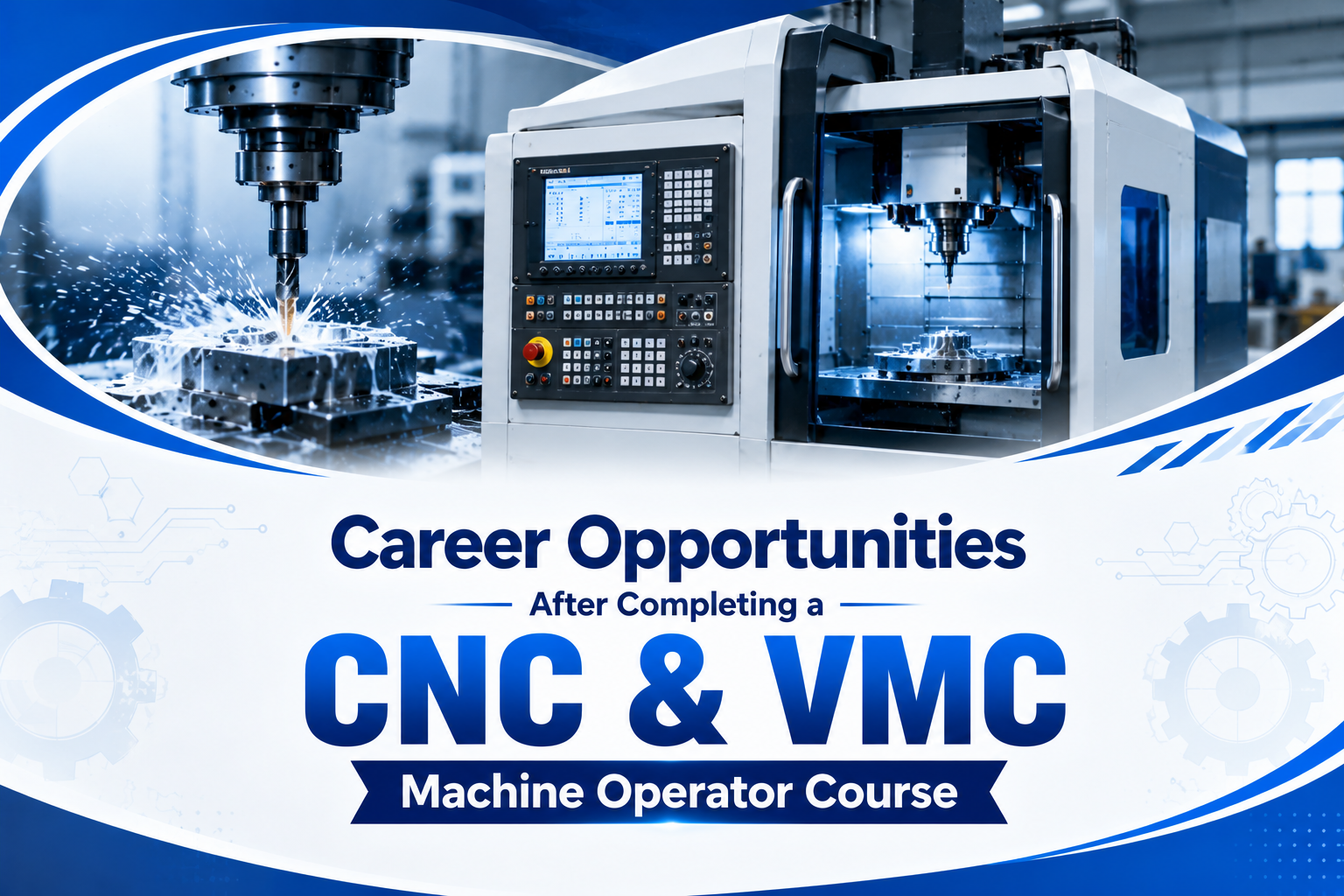
Career Opportunities After Completing a CNC & VMC Machine Operator Course

The manufacturing industry has transformed dramatically over the past decade. With the rise of automation, precision engineering, Industry 4.0, and smart manufacturing, the demand for skilled CNC (Computer Numerical Control) and VMC (Vertical Machining Center) machine operators has reached an all-time high. Today, industries no longer rely solely on conventional machining methods. Modern factories require professionals who can operate advanced CNC and VMC machines with precision, ensuring high-quality production and efficient manufacturing processes. If you’re considering a career in manufacturing, enrolling in a CNC & VMC Machine Operator Course can open the door to numerous career opportunities. From automotive manufacturing to aerospace engineering, skilled CNC and VMC operators are in demand across multiple industries. In this comprehensive guide, we’ll explore the career opportunities, required skills, salary expectations, industry demand, and long-term growth prospects after completing a CNC & VMC Machine Operator Course. What is a CNC & VMC Machine Operator Course? A CNC & VMC Machine Operator Course is a practical training program designed to teach students how to operate, set up, and maintain advanced machining equipment used in modern manufacturing. Unlike traditional classroom learning, this course focuses on hands-on experience with industrial machines. Students learn how to: The primary objective is to prepare students for real manufacturing environments. Why CNC & VMC Skills Are in High Demand Manufacturing industries across India and globally are adopting automation to improve productivity, precision, and efficiency. Industries require skilled operators because CNC and VMC machines are used for: As industries continue to modernize, the need for trained CNC professionals is increasing every year. Industries That Hire CNC & VMC Machine Operators One of the biggest advantages of completing a CNC & VMC Machine Operator Course is the wide range of industries you can work in. 1. Automotive Industry Automobile manufacturers rely heavily on CNC machining to produce: Popular employers include automobile manufacturers and auto component suppliers. 2. Aerospace Industry Aircraft components require extremely high precision. CNC machines manufacture: This sector offers excellent career growth and exposure to advanced technologies. 3. Tool Room Industry Tool rooms manufacture: Tool room professionals are among the most skilled workers in manufacturing. 4. Precision Engineering Companies Precision engineering companies manufacture: These companies require experienced CNC and VMC operators. 5. Defense Manufacturing Defense equipment requires precision machining for: This sector offers stable and rewarding careers. 6. Medical Equipment Manufacturing Medical device companies manufacture: These products require micron-level accuracy, making CNC expertise essential. 7. Heavy Engineering Industries Heavy engineering companies manufacture: CNC machining plays a vital role in producing durable and reliable components. Career Opportunities After Completing a CNC & VMC Machine Operator Course CNC Machine Operator This is one of the most common entry-level roles. Responsibilities include: This role provides a strong foundation for future career growth. VMC Machine Operator VMC operators specialize in vertical machining centers. Daily responsibilities include: This role is highly valued in precision manufacturing. CNC Programmer After gaining experience, operators can advance to CNC programming. Programmers: Programming professionals typically earn higher salaries. Production Engineer With additional education and experience, CNC professionals can become production engineers. Responsibilities include: Quality Control Engineer Quality professionals inspect manufactured components using precision measuring instruments. Responsibilities include: Tool Room Technician Tool room technicians manufacture: This is one of the highest-skilled career paths in manufacturing. Manufacturing Supervisor Experienced operators often move into supervisory positions. Supervisors manage: Leadership skills become important at this stage. Maintenance Technician Machine maintenance professionals ensure CNC machines operate efficiently. Responsibilities include: Skills You Learn During the Course A quality CNC & VMC course helps students develop both technical and professional skills. Technical Skills Soft Skills These skills make students job-ready from day one. Importance of Practical Training Manufacturing companies prefer candidates with practical experience rather than only theoretical knowledge. Hands-on training allows students to: Practical exposure significantly increases employability. Salary After Completing a CNC & VMC Machine Operator Course Salary depends on experience, location, company size, and technical skills. Fresher 2–3 Years Experience CNC Programmer Production Engineer Experienced Manufacturing Professionals Senior professionals working with advanced CNC machining, automation, or production management can earn well above ₹1,00,000 per month in leading manufacturing companies. Why Employers Prefer Skilled CNC Operators Companies look for professionals who can: Candidates with practical training require less onboarding and become productive much faster. Future Scope of CNC & VMC Careers Manufacturing is rapidly evolving with technologies like: Professionals with CNC expertise who continue learning new technologies will enjoy long-term career stability and growth. Higher Education and Career Growth After gaining industrial experience, professionals can pursue advanced roles by learning: These skills can lead to managerial and specialist positions. Benefits of Choosing a CNC & VMC Machine Operator Course Tips to Build a Successful Career To maximize your career opportunities: Choosing the Right CNC & VMC Training Institute When selecting an institute, look for: A well-equipped institute can significantly improve your learning experience and career prospects. Why Practical Learning Makes the Difference Reading about machining processes is valuable, but operating an industrial CNC machine develops confidence and technical expertise. Practical training helps students understand machine setup, tooling, programming basics, quality inspection, and troubleshooting—skills that employers expect from day one. The more time you spend working on real machines, the better prepared you’ll be for the demands of modern manufacturing. Final Thoughts A CNC & VMC Machine Operator Course is more than just a technical certification—it’s a gateway to a rewarding career in one of the world’s fastest-growing industries. As manufacturing becomes increasingly automated and technology-driven, the demand for skilled CNC and VMC professionals continues to rise. Whether you aspire to become a CNC Operator, VMC Operator, CNC Programmer, Tool Room Technician, Production Engineer, or Manufacturing Supervisor, the right combination of practical training, technical knowledge, and continuous learning will help you achieve your career goals. If you’re passionate about precision engineering and advanced manufacturing, investing in a quality CNC & VMC Machine Operator Course can set you on the path to long-term career success. Frequently Asked Questions (FAQs) 1. What jobs can I get after completing … Read more

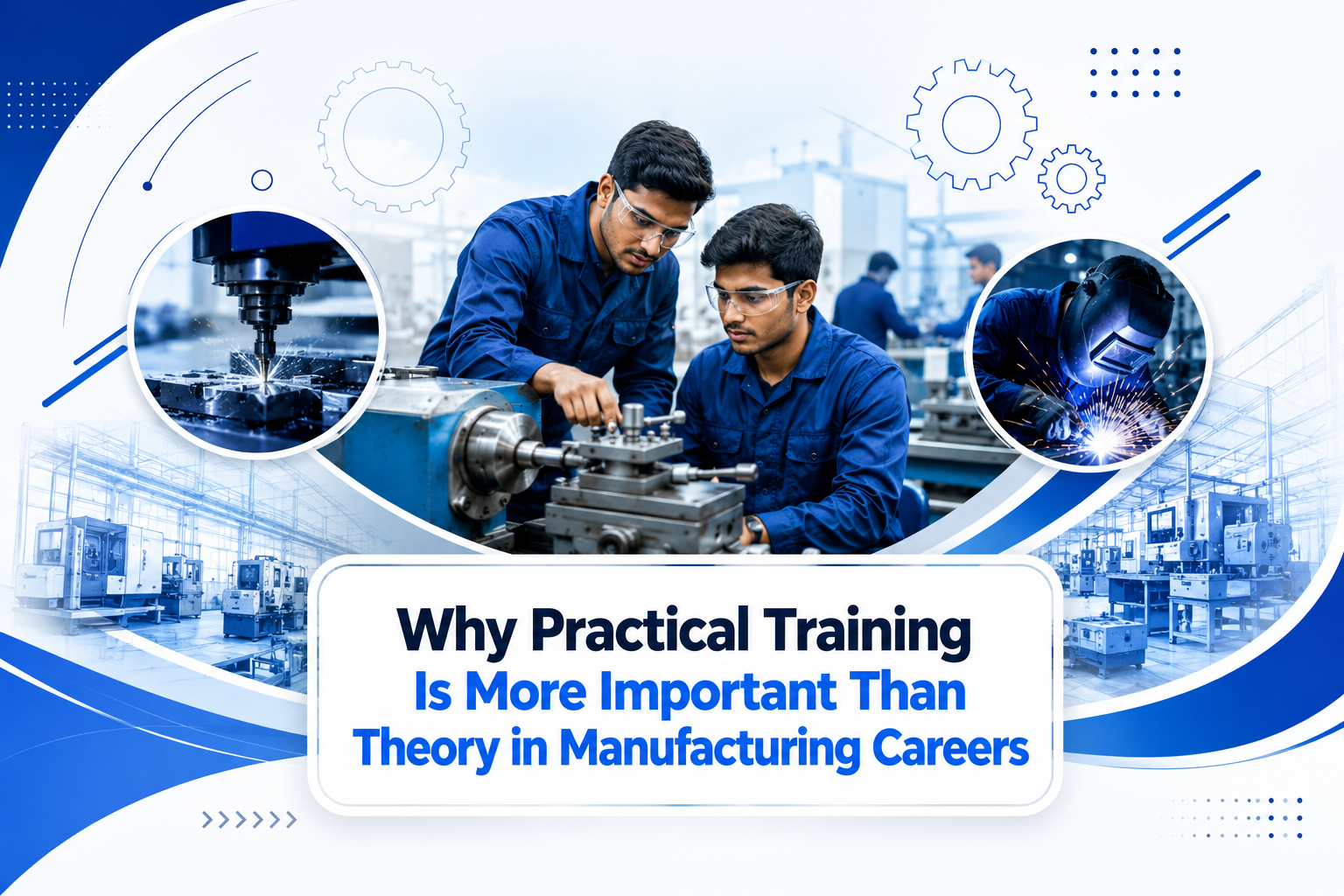
Why Practical Training Is More Important Than Theory in Manufacturing Careers

The manufacturing industry is evolving faster than ever before. Modern factories rely on advanced CNC machines, VMC machining centers, CAD/CAM software, automation systems, robotics, and precision measuring instruments. While classroom education provides the theoretical foundation, employers today are looking for candidates who can confidently operate machines, solve real-world production challenges, and contribute from day one. This is why practical training in manufacturing careers has become one of the most important factors for students and fresh engineering graduates. Whether you’re pursuing mechanical engineering, production engineering, diploma studies, ITI, or technical vocational education, hands-on industrial training bridges the gap between classroom knowledge and industry expectations. In this comprehensive guide, we’ll explore why practical training matters more than theoretical learning, the benefits it offers, and how it helps students build successful manufacturing careers. Understanding the Difference Between Theory and Practical Training Before discussing their importance, it’s essential to understand the difference between theoretical education and practical learning. Theory-Based Learning Theory focuses on: Theory helps students understand why manufacturing processes work. Practical Training Practical training focuses on: Practical learning teaches students how manufacturing actually happens. Both are important, but industries increasingly value practical experience because it directly impacts productivity and quality. Why Manufacturing Industries Prefer Practical Skills Manufacturing companies invest significant resources in hiring and training employees. They prefer candidates who already possess practical exposure because it reduces: An employee who already knows machine operations can contribute much sooner than someone who only understands textbook concepts. This is why employers often prioritize candidates who have completed industrial practical training programs. The Growing Skills Gap in Manufacturing One of the biggest challenges faced by industries today is the gap between academic education and industrial requirements. Many engineering graduates possess: But they often lack experience in: Practical training fills this gap by preparing students for actual manufacturing environments. Benefits of Practical Training in Manufacturing Careers 1. Real Industry Experience Classroom education cannot fully replicate industrial environments. Practical training allows students to experience: This exposure builds confidence before entering the workforce. 2. Better Understanding of Machines Students gain hands-on experience with machines such as: Learning directly on industrial equipment develops technical competence that textbooks cannot provide. 3. Improved Problem-Solving Skills Manufacturing involves unexpected challenges every day. Examples include: Practical training teaches students how to identify, analyze, and solve these issues efficiently. 4. Strong Technical Confidence Many graduates feel nervous during their first job because they have never worked with industrial machines. Hands-on learning eliminates this fear. Students become comfortable with: Confidence directly improves workplace performance. Practical Training Improves Employability Employers often ask fresh candidates questions like: Students with practical experience answer these questions confidently. As a result, they have better chances of: Learning CNC and VMC Machines Today’s manufacturing industry relies heavily on CNC and VMC technology. Practical CNC training includes: VMC practical training focuses on: These skills are highly valued by employers across industries. Importance of Engineering Drawing Interpretation Engineering drawings are the language of manufacturing. Students learn how to: Without practical exposure, many students struggle to convert drawings into finished products. Hands-on practice makes this process much easier. Measuring Instruments: A Critical Practical Skill Manufacturing demands accuracy. Students learn to use: Practical measurement skills ensure product quality and reduce production defects. Machine Safety Cannot Be Learned Only Through Books Industrial safety is one of the most important aspects of manufacturing. Practical training teaches: These experiences help students develop safe working habits. Exposure to Modern Manufacturing Technologies Manufacturing today involves advanced technologies including: Practical institutes expose students to these technologies before they enter industry. Better Understanding of Production Processes Manufacturing is more than operating machines. Students learn complete production cycles including: This holistic understanding prepares them for leadership roles in the future. Practical Training Enhances Communication Skills Industrial training also develops soft skills such as: Employers highly value these professional skills. Reduced Learning Curve During Employment Companies prefer employees who require minimal training. Practical learning helps students: This significantly reduces onboarding time. Higher Salary Opportunities Candidates with practical skills often receive better salary offers compared to candidates with only academic knowledge. Industries value individuals who can: Practical expertise directly contributes to organizational success. Better Career Growth Hands-on experience opens opportunities in roles such as: These careers offer excellent growth potential. Practical Training Builds Industry Confidence Many students hesitate during interviews because they lack industrial exposure. Practical training prepares students for: Confidence often becomes the deciding factor during recruitment. Learning Through Real Projects Instead of simply studying manufacturing concepts, students work on real industrial projects. Examples include: Project-based learning strengthens practical understanding. Industry Exposure Creates Better Professionals Students interact with: Learning from industry professionals provides valuable insights that books cannot offer. Importance of Tool Room Training Tool room training is one of the most valuable practical experiences for manufacturing students. Students learn: These specialized skills are always in demand. Common Skills Developed Through Practical Manufacturing Training Students typically develop expertise in: These competencies significantly improve employability. How Practical Training Prepares Students for Industry 4.0 Manufacturing is moving toward smart factories. Students need practical exposure to: Practical institutes introducing Industry 4.0 concepts give students a competitive advantage. Choosing the Right Practical Training Institute When selecting a manufacturing training institute, consider: Industry-Level Machines Choose institutes equipped with modern CNC and VMC machines. Experienced Trainers Learn from instructors with real industrial experience. Hands-on Learning Prioritize institutes offering maximum practical exposure. Small Batch Sizes Smaller batches ensure personalized attention. Placement Assistance Institutes with strong industry connections improve job opportunities. Updated Curriculum Training should align with current manufacturing technologies. Who Should Join Practical Manufacturing Training? Practical training is beneficial for: The Future of Manufacturing Belongs to Skilled Professionals The manufacturing industry is becoming increasingly technology-driven. Companies no longer seek employees who simply understand engineering theory. They want professionals who can: Practical training creates industry-ready professionals capable of meeting these expectations. Final Thoughts Theory forms the foundation of engineering education, but practical training transforms knowledge into real-world skills. In today’s competitive manufacturing sector, hands-on experience is no longer optional it is essential. … Read more