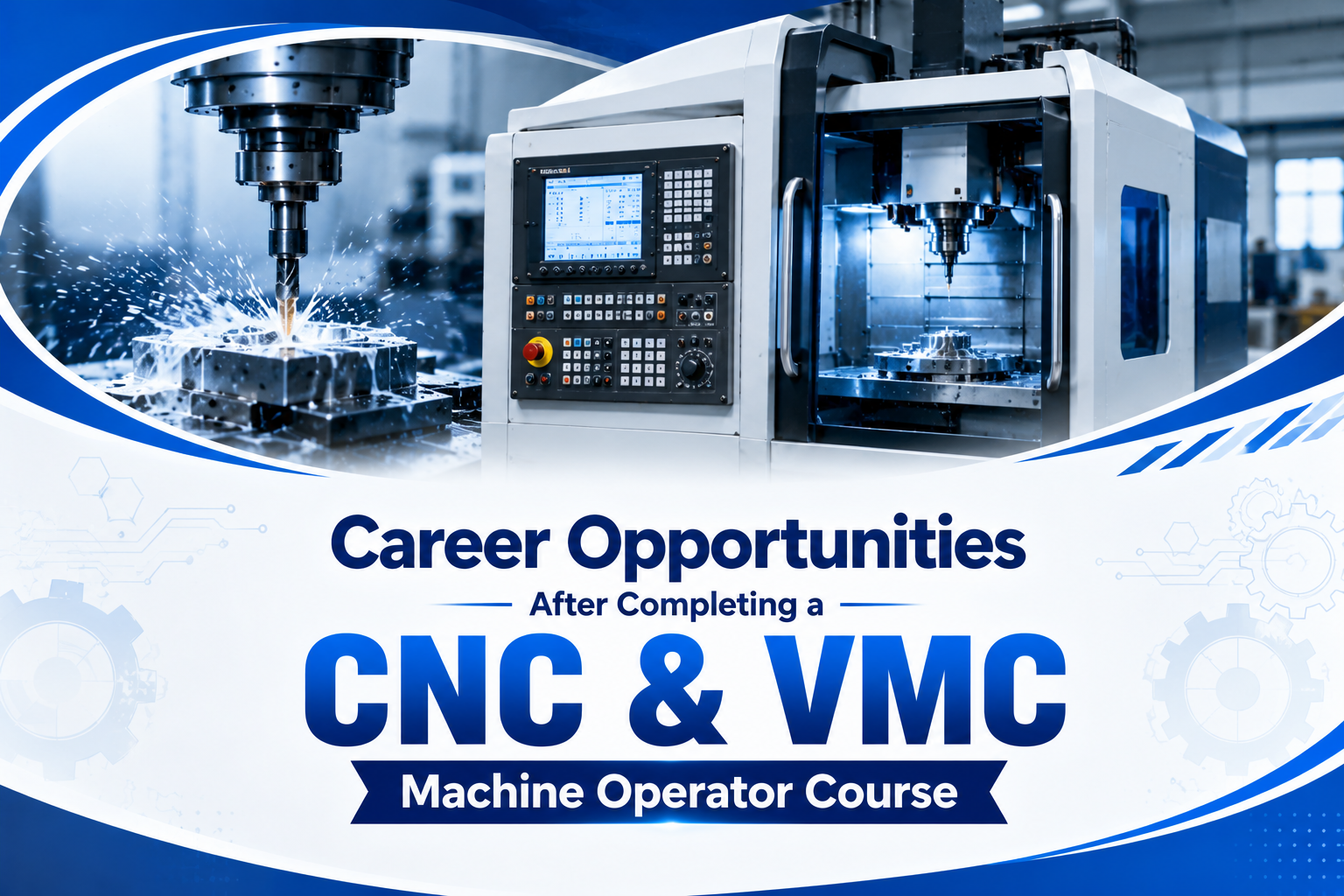
The manufacturing industry has transformed dramatically over the past decade. With the rise of automation, precision engineering, Industry 4.0, and smart manufacturing, the demand for skilled CNC (Computer Numerical Control) and VMC (Vertical Machining Center) machine operators has reached an all-time high.
Today, industries no longer rely solely on conventional machining methods. Modern factories require professionals who can operate advanced CNC and VMC machines with precision, ensuring high-quality production and efficient manufacturing processes.
If you’re considering a career in manufacturing, enrolling in a CNC & VMC Machine Operator Course can open the door to numerous career opportunities. From automotive manufacturing to aerospace engineering, skilled CNC and VMC operators are in demand across multiple industries.
In this comprehensive guide, we’ll explore the career opportunities, required skills, salary expectations, industry demand, and long-term growth prospects after completing a CNC & VMC Machine Operator Course.
What is a CNC & VMC Machine Operator Course?
A CNC & VMC Machine Operator Course is a practical training program designed to teach students how to operate, set up, and maintain advanced machining equipment used in modern manufacturing.
Unlike traditional classroom learning, this course focuses on hands-on experience with industrial machines.
Students learn how to:
- Operate CNC Turning Machines
- Operate VMC Machines
- Read engineering drawings
- Perform machine setup
- Select cutting tools
- Measure finished components
- Understand G-Code and M-Code basics
- Follow industrial safety standards
- Inspect product quality
- Troubleshoot machining issues
The primary objective is to prepare students for real manufacturing environments.
Why CNC & VMC Skills Are in High Demand
Manufacturing industries across India and globally are adopting automation to improve productivity, precision, and efficiency.
Industries require skilled operators because CNC and VMC machines are used for:
- High-volume production
- Precision component manufacturing
- Complex machining operations
- Reduced manual errors
- Faster production cycles
- Consistent product quality
As industries continue to modernize, the need for trained CNC professionals is increasing every year.
Industries That Hire CNC & VMC Machine Operators
One of the biggest advantages of completing a CNC & VMC Machine Operator Course is the wide range of industries you can work in.
1. Automotive Industry
Automobile manufacturers rely heavily on CNC machining to produce:
- Engine components
- Gearbox parts
- Brake systems
- Suspension components
- Transmission parts
Popular employers include automobile manufacturers and auto component suppliers.
2. Aerospace Industry
Aircraft components require extremely high precision.
CNC machines manufacture:
- Turbine parts
- Aircraft brackets
- Engine housings
- Structural components
This sector offers excellent career growth and exposure to advanced technologies.
3. Tool Room Industry
Tool rooms manufacture:
- Press Tools
- Dies
- Plastic Molds
- Fixtures
- Jigs
Tool room professionals are among the most skilled workers in manufacturing.
4. Precision Engineering Companies
Precision engineering companies manufacture:
- Medical equipment
- Industrial machinery
- Robotics components
- Semiconductor parts
- Custom mechanical components
These companies require experienced CNC and VMC operators.
5. Defense Manufacturing
Defense equipment requires precision machining for:
- Weapon components
- Vehicle parts
- Mechanical assemblies
- Specialized engineering products
This sector offers stable and rewarding careers.
6. Medical Equipment Manufacturing
Medical device companies manufacture:
- Surgical instruments
- Orthopedic implants
- Dental equipment
- Diagnostic devices
These products require micron-level accuracy, making CNC expertise essential.
7. Heavy Engineering Industries
Heavy engineering companies manufacture:
- Industrial machinery
- Construction equipment
- Mining equipment
- Hydraulic systems
CNC machining plays a vital role in producing durable and reliable components.
Career Opportunities After Completing a CNC & VMC Machine Operator Course
CNC Machine Operator
This is one of the most common entry-level roles.
Responsibilities include:
- Operating CNC machines
- Loading raw materials
- Running machining cycles
- Inspecting finished components
- Following production schedules
This role provides a strong foundation for future career growth.
VMC Machine Operator
VMC operators specialize in vertical machining centers.
Daily responsibilities include:
- Machine setup
- Tool changing
- Component inspection
- Programming support
- Maintaining machining accuracy
This role is highly valued in precision manufacturing.
CNC Programmer
After gaining experience, operators can advance to CNC programming.
Programmers:
- Create machining programs
- Optimize production cycles
- Reduce machining time
- Improve tool life
- Increase manufacturing efficiency
Programming professionals typically earn higher salaries.
Production Engineer
With additional education and experience, CNC professionals can become production engineers.
Responsibilities include:
- Managing production
- Improving productivity
- Supervising operators
- Planning manufacturing schedules
- Reducing manufacturing costs
Quality Control Engineer
Quality professionals inspect manufactured components using precision measuring instruments.
Responsibilities include:
- Product inspection
- Quality documentation
- Dimensional verification
- Process improvement
- Defect analysis
Tool Room Technician
Tool room technicians manufacture:
- Dies
- Molds
- Press tools
- Precision fixtures
This is one of the highest-skilled career paths in manufacturing.
Manufacturing Supervisor
Experienced operators often move into supervisory positions.
Supervisors manage:
- Operators
- Production planning
- Machine allocation
- Shift management
- Productivity improvement
Leadership skills become important at this stage.
Maintenance Technician
Machine maintenance professionals ensure CNC machines operate efficiently.
Responsibilities include:
- Preventive maintenance
- Machine calibration
- Breakdown analysis
- Component replacement
- Troubleshooting
Skills You Learn During the Course
A quality CNC & VMC course helps students develop both technical and professional skills.
Technical Skills
- CNC Machine Operation
- VMC Machine Operation
- Tool Selection
- Workpiece Clamping
- Machine Setup
- Offset Setting
- Tool Compensation
- Engineering Drawing Reading
- Vernier Caliper Operation
- Micrometer Measurement
- Surface Finish Inspection
- G-Code Basics
- M-Code Basics
- Quality Inspection
Soft Skills
- Teamwork
- Communication
- Time Management
- Problem Solving
- Industrial Discipline
- Safety Awareness
- Documentation
These skills make students job-ready from day one.
Importance of Practical Training
Manufacturing companies prefer candidates with practical experience rather than only theoretical knowledge.
Hands-on training allows students to:
- Work on industrial machines
- Solve real production challenges
- Understand machine behavior
- Build confidence
- Improve technical accuracy
Practical exposure significantly increases employability.
Salary After Completing a CNC & VMC Machine Operator Course
Salary depends on experience, location, company size, and technical skills.
Fresher
- ₹15,000 – ₹22,000 per month
2–3 Years Experience
- ₹25,000 – ₹40,000 per month
CNC Programmer
- ₹40,000 – ₹70,000 per month
Production Engineer
- ₹50,000 – ₹90,000+ per month
Experienced Manufacturing Professionals
Senior professionals working with advanced CNC machining, automation, or production management can earn well above ₹1,00,000 per month in leading manufacturing companies.
Why Employers Prefer Skilled CNC Operators
Companies look for professionals who can:
- Reduce machine downtime
- Maintain quality
- Increase production
- Minimize material wastage
- Follow safety standards
- Operate machines independently
Candidates with practical training require less onboarding and become productive much faster.
Future Scope of CNC & VMC Careers
Manufacturing is rapidly evolving with technologies like:
- Industry 4.0
- Artificial Intelligence
- Robotics
- CAD/CAM Integration
- Smart Factories
- Automation
- Digital Manufacturing
Professionals with CNC expertise who continue learning new technologies will enjoy long-term career stability and growth.
Higher Education and Career Growth
After gaining industrial experience, professionals can pursue advanced roles by learning:
- Advanced CNC Programming
- CAD/CAM Software
- Tool Design
- Die Design
- Plastic Mold Design
- Robotics Programming
- PLC Automation
- Quality Engineering
- Lean Manufacturing
- Six Sigma
These skills can lead to managerial and specialist positions.
Benefits of Choosing a CNC & VMC Machine Operator Course
- High industry demand
- Practical learning
- Faster employment
- Excellent career growth
- Opportunities in India and abroad
- Good salary progression
- Exposure to advanced manufacturing technologies
- Strong foundation for higher technical roles
Tips to Build a Successful Career
To maximize your career opportunities:
- Focus on practical training.
- Learn engineering drawing interpretation.
- Practice precision measurement.
- Understand machine maintenance.
- Develop problem-solving skills.
- Stay updated with automation and Industry 4.0 trends.
- Build communication and teamwork skills.
- Continuously upgrade your technical knowledge.
Choosing the Right CNC & VMC Training Institute
When selecting an institute, look for:
- Modern CNC and VMC machines
- Experienced instructors
- Hands-on industrial training
- Small batch sizes
- Placement assistance
- Updated curriculum
- Industry-oriented projects
- Safety-focused workshops
A well-equipped institute can significantly improve your learning experience and career prospects.
Why Practical Learning Makes the Difference
Reading about machining processes is valuable, but operating an industrial CNC machine develops confidence and technical expertise. Practical training helps students understand machine setup, tooling, programming basics, quality inspection, and troubleshooting—skills that employers expect from day one.
The more time you spend working on real machines, the better prepared you’ll be for the demands of modern manufacturing.
Final Thoughts
A CNC & VMC Machine Operator Course is more than just a technical certification—it’s a gateway to a rewarding career in one of the world’s fastest-growing industries. As manufacturing becomes increasingly automated and technology-driven, the demand for skilled CNC and VMC professionals continues to rise.
Whether you aspire to become a CNC Operator, VMC Operator, CNC Programmer, Tool Room Technician, Production Engineer, or Manufacturing Supervisor, the right combination of practical training, technical knowledge, and continuous learning will help you achieve your career goals.
If you’re passionate about precision engineering and advanced manufacturing, investing in a quality CNC & VMC Machine Operator Course can set you on the path to long-term career success.
Frequently Asked Questions (FAQs)
1. What jobs can I get after completing a CNC & VMC Machine Operator Course?
You can work as a CNC Machine Operator, VMC Operator, CNC Programmer, Tool Room Technician, Production Engineer, Quality Inspector, Maintenance Technician, or Manufacturing Supervisor.
2. Is CNC & VMC a good career option?
Yes. Skilled CNC and VMC professionals are in high demand across industries such as automotive, aerospace, medical equipment, defense, and precision engineering.
3. What is the starting salary for a CNC Machine Operator?
Freshers typically earn between ₹15,000 and ₹22,000 per month, depending on their skills, location, and employer.
4. Is practical training important for CNC careers?
Absolutely. Hands-on experience with industrial CNC and VMC machines is one of the most important factors employers consider during recruitment.
5. Can I grow beyond an operator role?
Yes. With experience and additional skills, you can advance to roles such as CNC Programmer, Production Engineer, Tool Room Specialist, Quality Engineer, Manufacturing Supervisor, or even Plant Manager.